
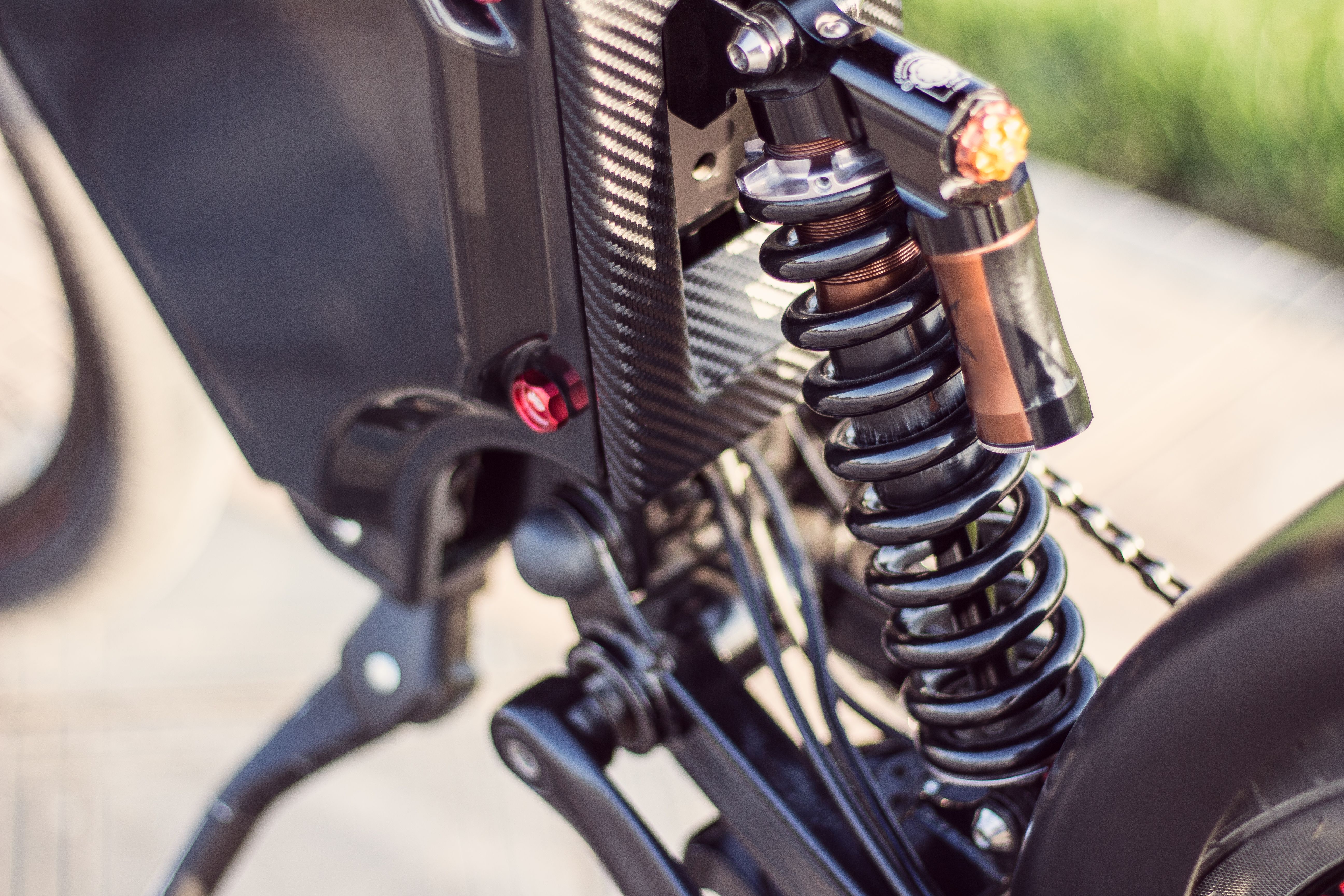
If you are dumping all your money into bore kits and exhaust systems while riding on stock suspension, you are building a dangerous machine. Power is useless if your tires cannot maintain contact with the asphalt.
Stock suspensions are built with a "one-size-fits-all" mentality, designed for an average rider weight and average commuting conditions. But if you are hitting the canyons, pushing track days, or just want absolute stability at high speeds, upgrading and tuning your suspension is the single highest-value modification you can make.
Step 1: Setting Your Sag (Preload) Before you touch any clickers, you must set your suspension sag. Sag is the amount your suspension compresses when you (and your riding gear) sit on the bike.
If your preload is too soft, your bike will bottom out on bumps and steer like a boat. If it’s too stiff, the tire will skip over imperfections, causing a complete loss of traction.
Static Sag: The compression of the bike under its own weight.
Rider Sag: The compression when you are fully seated in riding position.
Mechanic's Tip: Upgrading to an aftermarket rear shock with an adjustable threaded preload collar allows you to dial in your exact rider weight down to the millimeter, completely transforming the geometry of your chassis.
Step 2: Rebound Damping Rebound controls how fast the shock extends after it hits a bump.
Too fast (Under-damped): The bike will feel like a pogo stick, bouncing you out of the seat after a hard compression.
Too slow (Over-damped): The shock won't extend fast enough for the next bump, causing it to "pack down" and feel completely rigid.
Premium aftermarket shocks from brands like Ohlins, YSS, or RCB offer dedicated rebound clickers. You want the suspension to return to its neutral position as quickly as possible without overshooting and bouncing.
Step 3: Compression Damping Compression controls how fast the shock compresses when hitting a bump or under heavy braking. High-end forks and shocks separate this into High-Speed Compression (hitting a pothole) and Low-Speed Compression (chassis dive during hard braking).
The Verdict Do not neglect your suspension. Swapping your cheap factory shocks for a precision-machined, fully adjustable aftermarket setup will instantly increase your cornering speed, drastically reduce braking distance, and keep you glued to the road when it matters most.